

Renter-Friendly Bedroom Upgrades That Make a Big Difference
By HomeStyledLiving | October 19, 2026
There is a particular tiredness that comes from living in a bedroom you are not allowed to change. The walls are whatever color the last tenant left. The ceiling light is one flat disc that makes everything look like a waiting room. Every idea you save seems to begin with the words “mount to the wall”, and every time you reach for the drill you remember the deposit.
The good news is that a rented bedroom is rarely held back by its walls. It is held back by a handful of unfinished moments: a bed with nothing behind it, light that arrives only from above, a floor that feels bare, a corner where clothes pile up because they have nowhere to go. Each of those can be answered without a single hole, and each answer is something you can take with you when you leave.
This guide walks through twelve reversible upgrades, from a textured panel behind the bed to a dimmer you simply plug in. Every one has been weighed against the question a renter really asks: what happens to this on moving day? Some pieces peel off, some stand on their own, some clip, press or plug in.
Every renter-friendly upgrade here has limits, and they are worth knowing before you buy. Adhesives behave differently on different walls, and no product listing can promise how your particular paint will respond. Where a detail is not on the listing, such as a weight rating or a bed size, check the packaging and instructions before you rely on it.
Read it as a menu, not a project plan. Two or three well-chosen changes will do more for the room than all twelve at once.
1. Turn the Wall Behind the Bed Into a Feature With Peel-and-Stick Wallpaper
 Save it
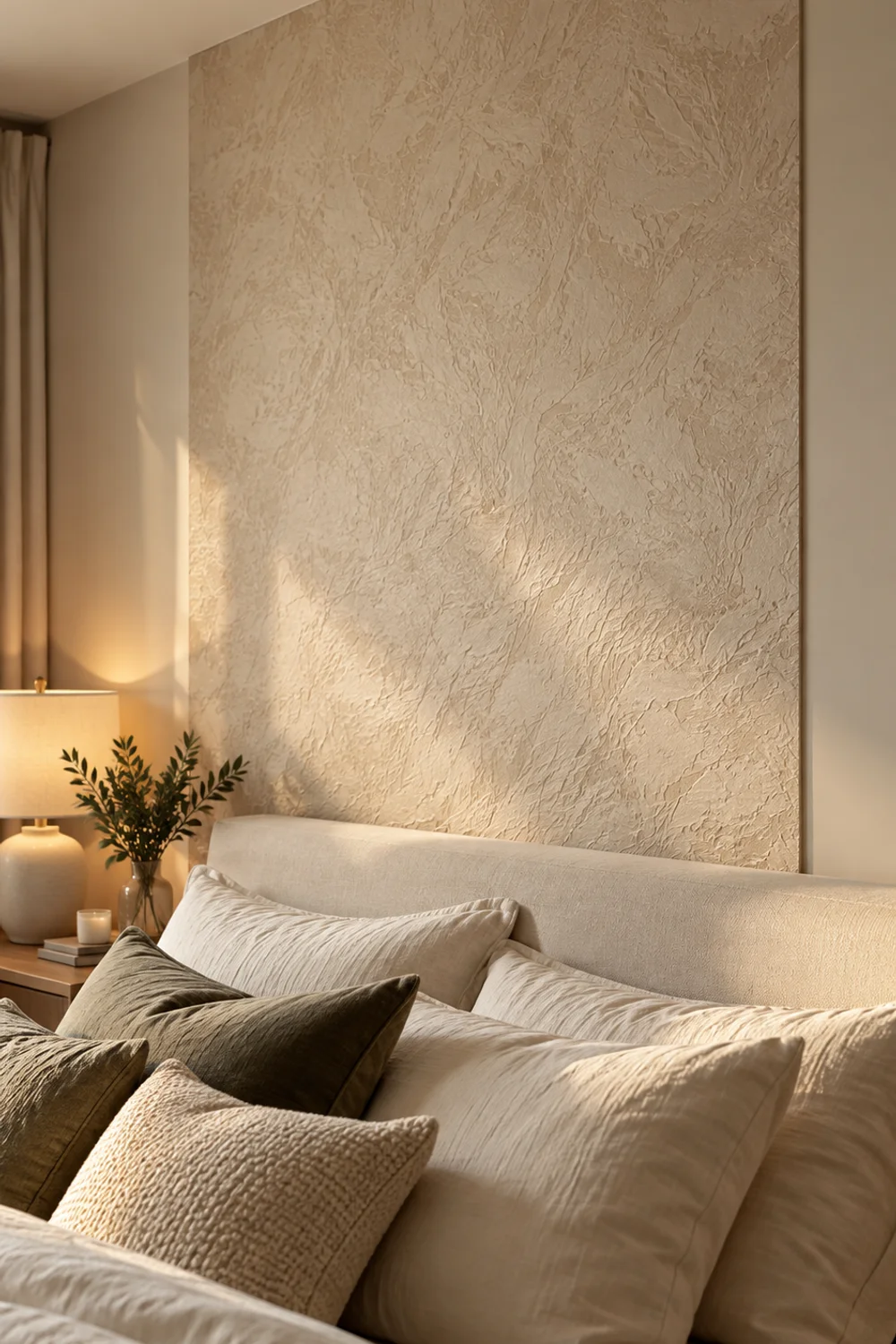
The wall behind the bed is the one you see from the doorway, from the pillow and from the half-lit walk to the bathroom at night, which makes it the wall worth spending effort on. In a rental it is usually a flat expanse of landlord white, and a flat wall makes a bed look parked rather than placed. A single textured panel changes that without paint, because texture gives a neutral color a depth that a flat shade never has.
Choose texture over pattern. A bold print on a wall you cannot repaint is a commitment, and it will compete with the bedding, the art and everything else you add later. A cream with some surface texture behaves differently: it catches lamplight, shifts through the day and sits quietly behind whatever you place in front of it. This roll is a cream, textured peel-and-stick vinyl sold as removable, which suits exactly that quiet-depth approach.
Think in panels rather than whole walls. The listing gives the roll size as 15.8 by 78.8, so confirm the unit on the page; if those are inches, each strip is narrow, and covering a full wall means a lot of strips and a lot of seams. A panel about the width of the headboard, plus a hand’s width on each side, needs far fewer and leaves painted wall on either side for the sconces and shelf you will meet later in this guide.
Prepare the surface properly. The wall should be clean, dry and smooth, and the paper pressed out from the center so air does not collect under it. Keep a pencil level line for the first strip, since every strip after it follows that one.
Be realistic about moving out. The listing calls the paper removable, but how a wall responds depends on its paint, its age and how long the paper has been up. Try a small patch somewhere hidden, give it time, peel it, and look at what comes away with it before committing a whole panel. If your lease asks for permission to decorate, ask first.
2. Add an Upholstered Headboard for a More Finished Bedroom Look
 Save it
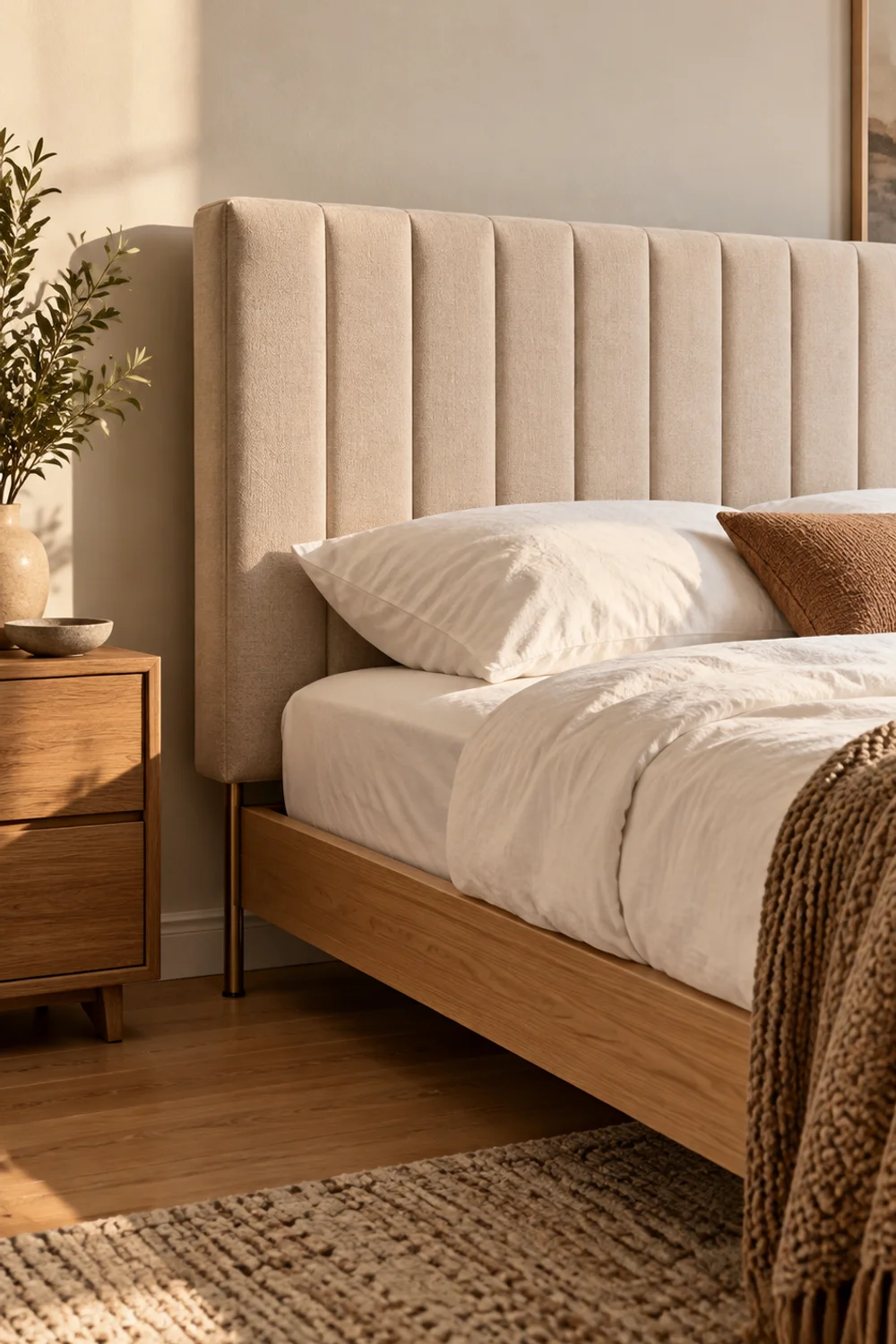
A bed without a headboard is a mattress on a frame, however beautifully it is dressed. The headboard is what makes it a bed: it gives your back somewhere to rest, gives the pillows a backdrop and draws the eye to a defined shape instead of letting it slide into the wall. In a rental, many routes to a headboard involve screws, which is why a free-standing headboard is worth knowing about.
This headboard is an oatmeal upholstered panel with a line-panel face, metal legs and adjustable height, sold as a headboard only. The listing describes it as free-standing and foldable, with easy assembly.
Oatmeal also sits well against the cream wallpaper from the first section: close in tone, which is the kind of tonal layering that makes a room look planned. The line-panel face adds structure without adding pattern, so the bedding in front of it can stay calm.
Size comes first. This is a King headboard, and the listing shows no other sizes, so measure your mattress and compare it with the dimensions on the page before you order. If your bed is a different size, do not assume this one will suit it. The same goes for height: the listing mentions adjustments but no range, so check it against the thickness of your mattress and how many pillows you sleep on.
“Headboard only” means exactly that, with no frame included. Follow the assembly instructions, and once it is built, give it a gentle push to check that it stands firmly before you lean on it.
3. Swap Table Lamps for Wireless Sconces That Peel and Stick
 Save it
Light is where a rented bedroom most often feels rented. The overhead fixture is fixed and flat, and a bedside table crowded with lamps leaves no room for anything else. Wall sconces fix both problems by lifting the light off the surface and putting it where you read, but hardwired sconces are very much a landlord’s decision. Battery-powered, adhesive sconces are the version a renter can say yes to.
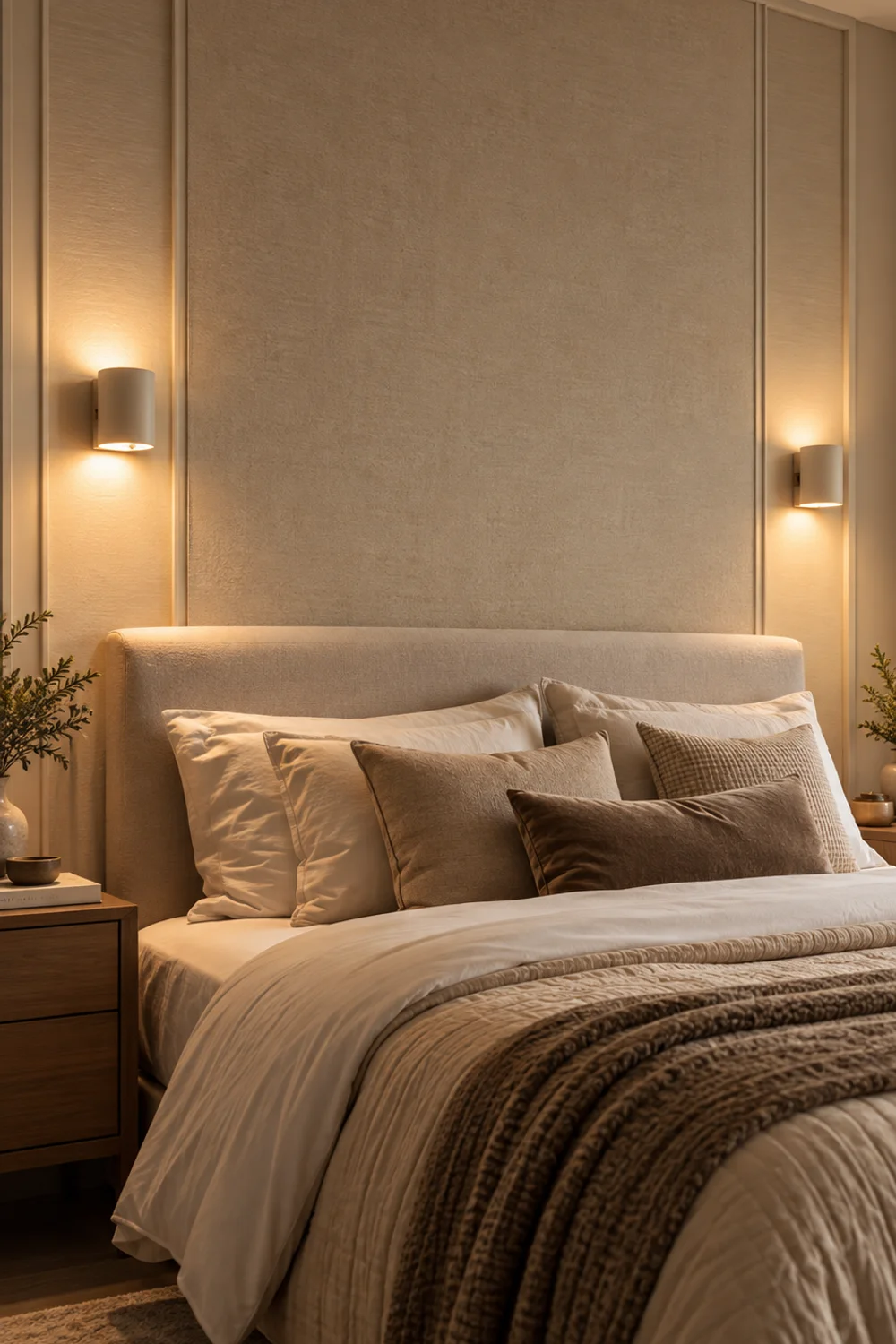
This set comes as two wireless, peel-and-stick sconces with a rechargeable bulb and a remote, sold as no-drill and meant for bedrooms.
Look closely at the bulb. The listing describes an RGB bulb with a remote and does not confirm a warm white setting, so check for one before you count on these for a bedroom. If the remote offers only colors or a cool white, they will suit accent light better than a reading light. The adhesive’s weight limit and the surfaces it suits are not stated on the listing, so read the pack before you stick anything up, and keep the sconces off wallpaper, where adhesives and removable paper make an unreliable pair.
Placement is where the wallpaper panel earns its keep. Treat the panel as a frame: set each sconce on bare painted wall just outside its edge, the same distance away on both sides, so the two lights read as brackets around the panel and the headboard in front of it. Mounted that way, the sconces repeat the panel’s vertical edges, and the bed wall looks drawn rather than decorated.
If you do have an outlet within reach on each side of the bed, plug-in swing-arm sconces are another route, and Easy Small Bedroom Ideas That Make Any Room Feel Bigger shows how they can replace bulky table lamps in a small room.
Since these run on a battery, think about habit. A light you must remember to recharge needs a home next to the charger, and a remote needs a drawer. Decide where both will live before you hang the sconces, and the upgrade will keep working long after the novelty has faded.
4. Add a Storage Ottoman at the Foot of the Bed

 Save it
The foot of the bed is the most overlooked piece of floor in a bedroom. It is where a bag lands, where shoes are pulled on and where yesterday’s jacket waits, and without a piece of furniture there it all collects on the mattress or the floor. A low ottoman gives that spot a purpose, and it quietly finishes the bed, as hotel rooms often do.
This ottoman is a cushioned white boucle bench, 30 inches wide, with hidden storage, and its listing pitches it for bedrooms, dorms and entryways.
At 30 inches, it is a modest piece, roughly half the width of a standard queen mattress. That suits a narrower bed or a bedroom where a longer bench would block the walkway, and it can be pushed to one side of the foot of a larger bed to leave room for the door. Proportion matters more than matching, so measure the clear floor at the foot of your bed before choosing, and leave enough space to walk around it without turning sideways.
Think of it first as a landing seat. It is where you sit to put on shoes, where a bag can rest instead of the bed, and where the day’s clothes can wait a moment before they go back in the closet. The hidden storage is a bonus for something small and flat, such as spare pillowcases or a pair of slippers. The listing does not give a weight rating or storage volume, so check both on the page before you sit on it for more than a moment, and do not load it past what it states.
White boucle is beautiful and unforgiving, and light fabrics tend to show marks quickly. A seat for shoes and bags will see more wear than most, so put shoes on from the edge rather than the cushion, set bags on a folded throw, and follow the manufacturer’s cleaning guidance, testing any cleaner somewhere hidden first. The listing does not set out care instructions.
5. Hang Floor-Length Curtains From a Tension Rod
 Save it
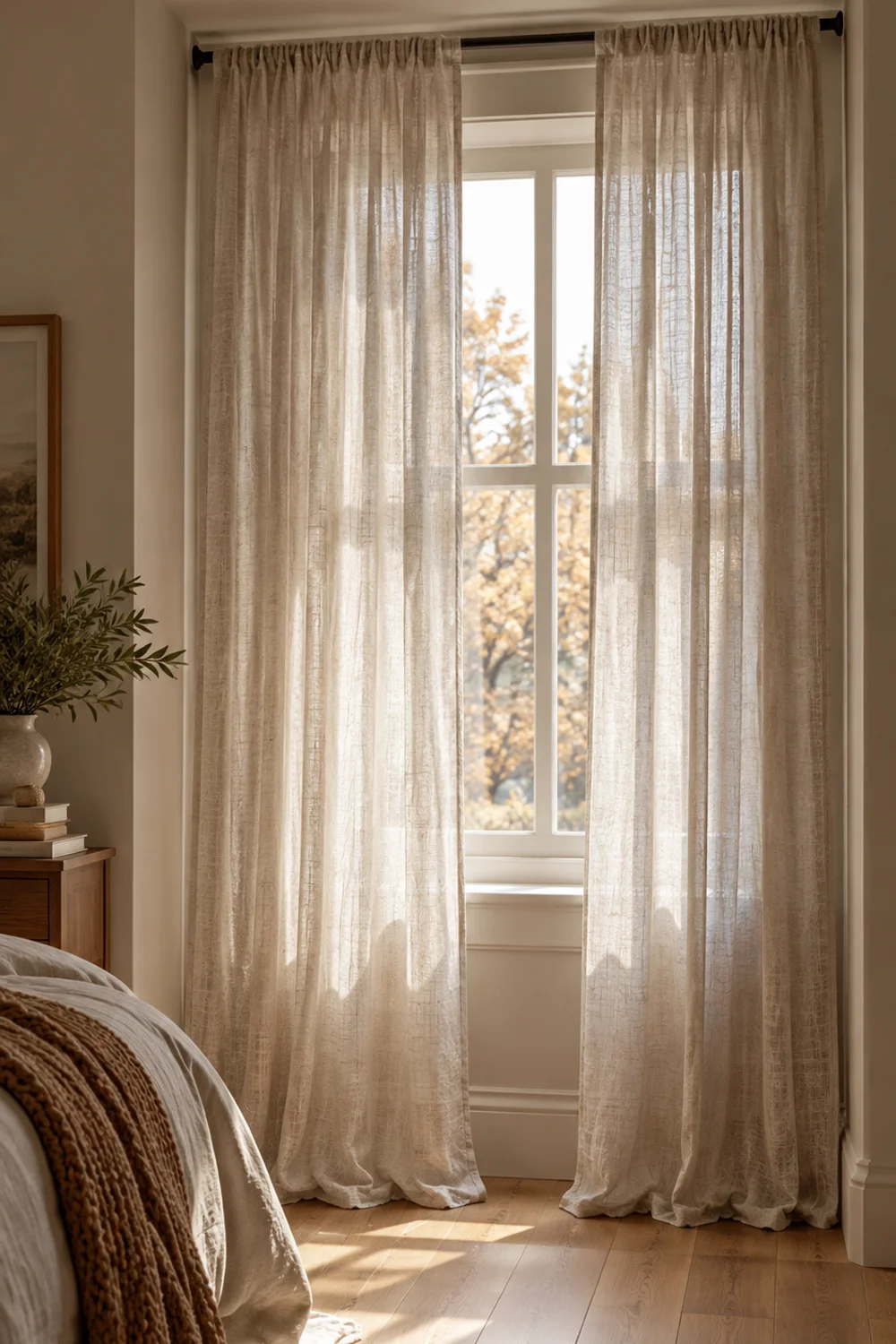
Curtains are one of the fastest ways to make a bedroom feel softer and more expensive, and the biggest obstacle for renters is the rod. Brackets mean holes, and holes mean explaining yourself on moving day. A tension rod sidesteps both: it presses between two firm surfaces, usually the sides of a window recess, and holds itself in place.
A black spring tension rod that adjusts from 30 to 120 inches and measures 1.1 inches in diameter; the listing calls it heavy duty and no-drilling, and pitches it for windows, bathrooms and patios.
A tension rod needs two parallel, firm surfaces to push against, so it works best inside a window recess or an alcove with solid sides, and measure the recess exactly before choosing a size. The listing’s range is very wide, which is useful, but the longer a tension rod spans, the more it can bow, so buy the shortest range that fits rather than the longest.
You can still get a floor-length look. Fix the rod as high as the recess allows, then choose panels long enough to reach the floor or just skim it. The rod stays inside the frame, so the fabric will not add height, but floor-length panels lengthen the window and soften the wall around it.
Weight is the open question. The listing pitches this as a shower, window and patio rod and states no load rating for bedroom curtains, so start with light panels and check the pack before hanging anything heavy, such as lined or blackout curtains.
Choose a panel you can wash and a fabric that falls in soft folds. Hung wide, with generous fullness, two plain panels will do more for a bedroom than any amount of window decoration, and the whole arrangement comes down in a minute when you move.
6. Ground the Bed With a Large Washable Rug
 Save it
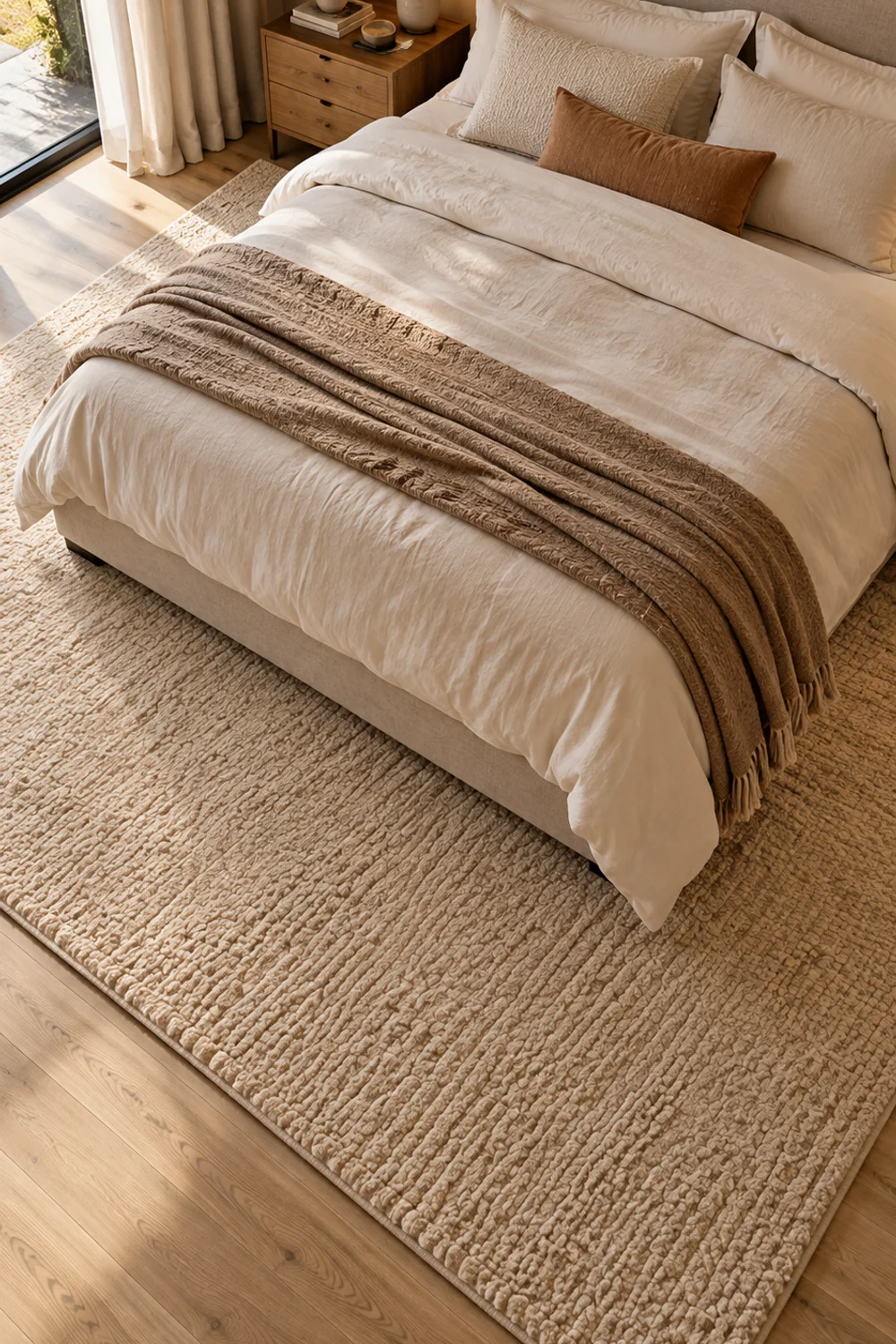
A bed floating on bare floor looks unfinished, and in a rental that floor is often the least appealing surface in the room: scuffed laminate, tired carpet, tile that feels cold under bare feet. A large rug does three things at once. It hides what you would rather not see, it warms the first step of the morning and it anchors the bed so the furniture reads as a group.
A 6 by 9 beige rug with a high-low pile, sold as washable and non-slip and pitched for bedrooms and living rooms.
A rug works best when it sits partly under the bed and reaches past the foot, so your feet land on it as you get out. How a 6 by 9 foot rug looks beneath your bed depends on where you place it and how much rug you want to see around the bed. At 72 inches wide, it leaves a modest border at each side of a queen, which is 60 inches wide. Under a king, which is about 76 inches wide, it would be narrower than the mattress, so it would show mostly at the foot, a workable look if all you want is a soft landing for your feet. Turned so the 9-foot side runs across the bed, it gives a more generous border at the sides but less depth toward the foot. If you want more rug showing on every side, the listing shows no size selector, so check which sizes are offered before you buy. Either way, mark the rug’s shape out on the floor with painter’s tape to see where it falls.
The high-low pile adds a sculpted texture without pattern, a calm foil to the bedding and the textured wall. Beige is a safe tone that suits most floors, which is the point: it will go with the next apartment too.
Treat the claims with some care. “Washable” is the listing’s description, and the page does not give care instructions, so check the label for how it should be washed and whether your machine can take a 6 by 9. “Non-slip” is also the listing’s word, and no rug can promise to stay put on every surface, so test it on your floor before you rely on it, and consider a rug pad on smooth hardwood or tile.
7. Add Stylish Wall Storage Without Traditional Nails
 Save it
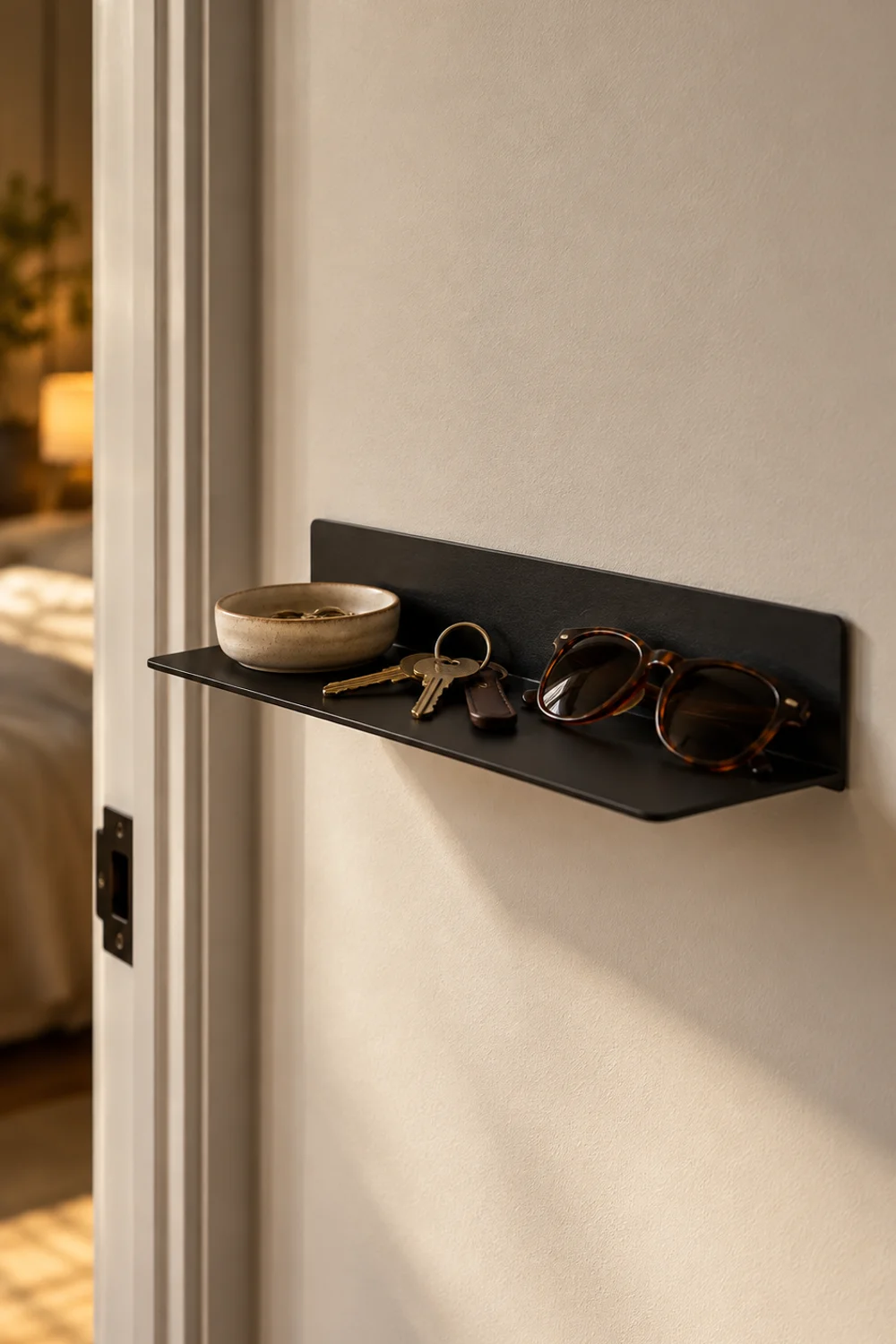
Every rented bedroom has a wall that wants a small shelf: beside the door for keys, near the dresser for sunglasses or a small dish. The usual answer is a bracket and two screws. The renter’s answer is a shelf sold with mounting strips instead, which keeps the question of holes off the table, though not the question of the wall.
This shelf is a matte black metal wall shelf, sold as one shelf with eight large strips.
Treat this as a shelf for light, unbreakable things, such as keys, sunglasses or a small dish. The listing does not state a weight rating or the mounting instructions, so the packaging and its instructions are the authority here: follow them for surface preparation, waiting time and how to remove the strips. Do not load the shelf with anything heavy or breakable that you would be sorry to lose.
Where you put it matters. Choose a bare, clean, smooth painted wall, not the wallpaper panel behind the bed, since adhesives and removable paper do not belong together, and not directly above the bed, where anything that falls lands on a sleeper. A wall beside the door, above a dresser or in a corner is a better home.
Strips made for removal still do not guarantee a clean wall. Depending on the paint and the wall, removal can mark or lift a surface, so follow the removal steps on the pack exactly.
Used with restraint, one shelf is enough. A single matte black line on a pale wall works like punctuation: it gives the eye somewhere to stop, and echoes the black of the curtain rod.
8. Replace the Missing Nightstand With a Clip-On Bedside Shelf
 Save it
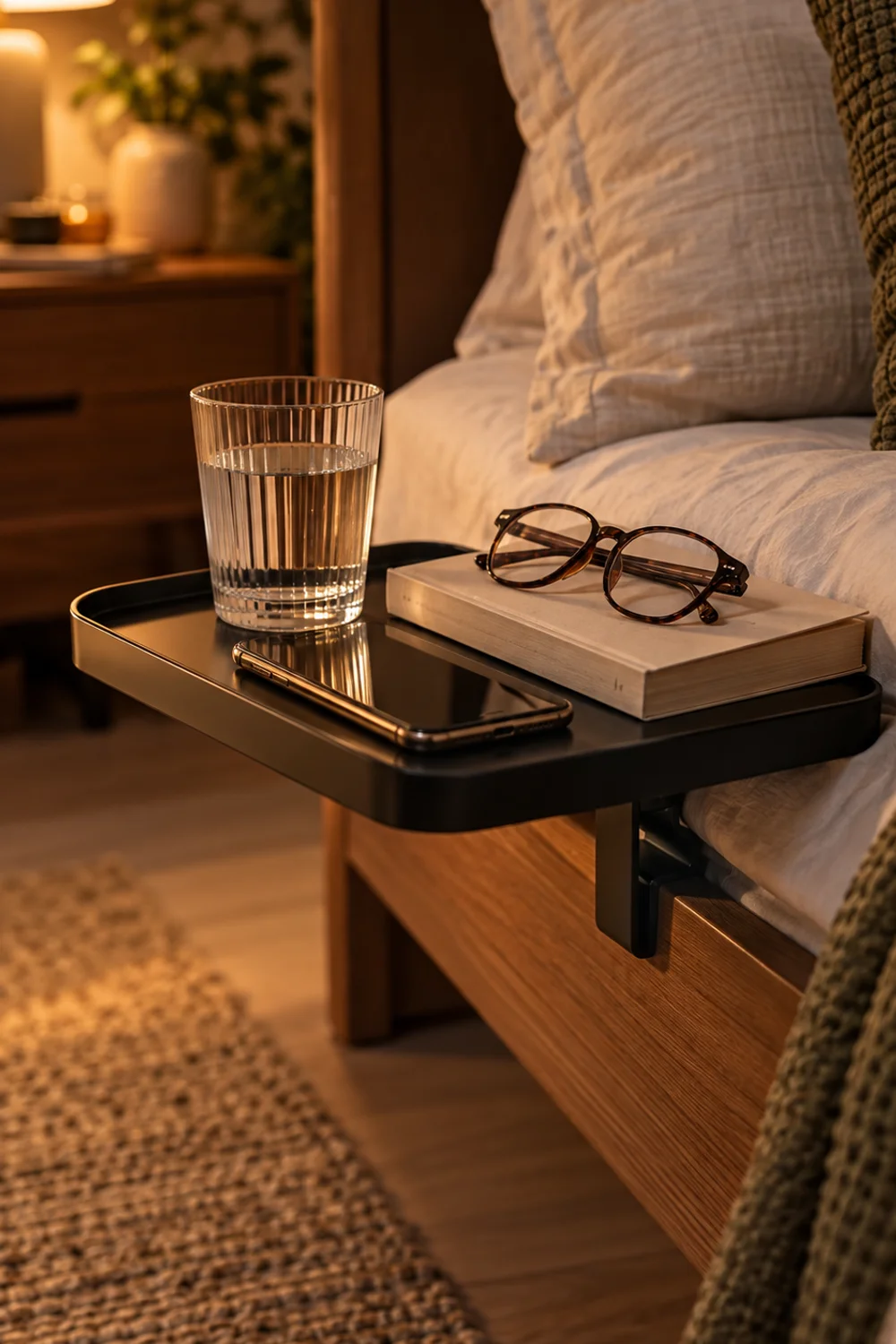
Many rented bedrooms simply have no room for a nightstand: a bed pushed into a corner, a narrow room, a doorway that leaves no more than a hand’s width of floor beside the mattress. Yet the need does not go away. You still want a phone, a glass of water, a book and your glasses within reach, and without a surface they end up on the floor or in the bedding.
A clip-on tray is the lightest answer to the missing nightstand, and the BedShelfie is sold exactly that way: a black bedside caddy for dorm rooms and bunk beds, described as a loft nightstand.
The honest catch is fit. The listing is aimed at bunk and loft beds, and it does not say which frame thicknesses it suits or how much it can hold, so measure your bed rail before you order and compare it with the listing’s compatibility details. Do not assume it will fit a standard frame, and check whether your frame has an exposed rail to clip to at all.
If it does fit, treat it as a tray for four things at most. A phone, a glass, one book and a pair of glasses is the whole job. Anything beyond that makes a small shelf into a dumping ground, and a clip-on tray is the wrong place for a heavy lamp, a stack of books or anything you cannot afford to knock over.
A bedside shelf only solves part of the problem; for the rest of the surface clutter that gathers around a bed, Simple Bedroom Organization Ideas That Create a Clutter-Free Space gives each bedroom hotspot a simple landing spot.
Keep a cable under control as well. A charger that drapes from the tray to the floor catches feet and tugs the phone, so let it fall straight to the socket or tuck it behind the bed leg. A shelf that holds only what you need, with nothing trailing from it, is what makes a small bedside zone feel considered.
9. Refresh a Tired Dresser by Swapping the Knobs
 Save it
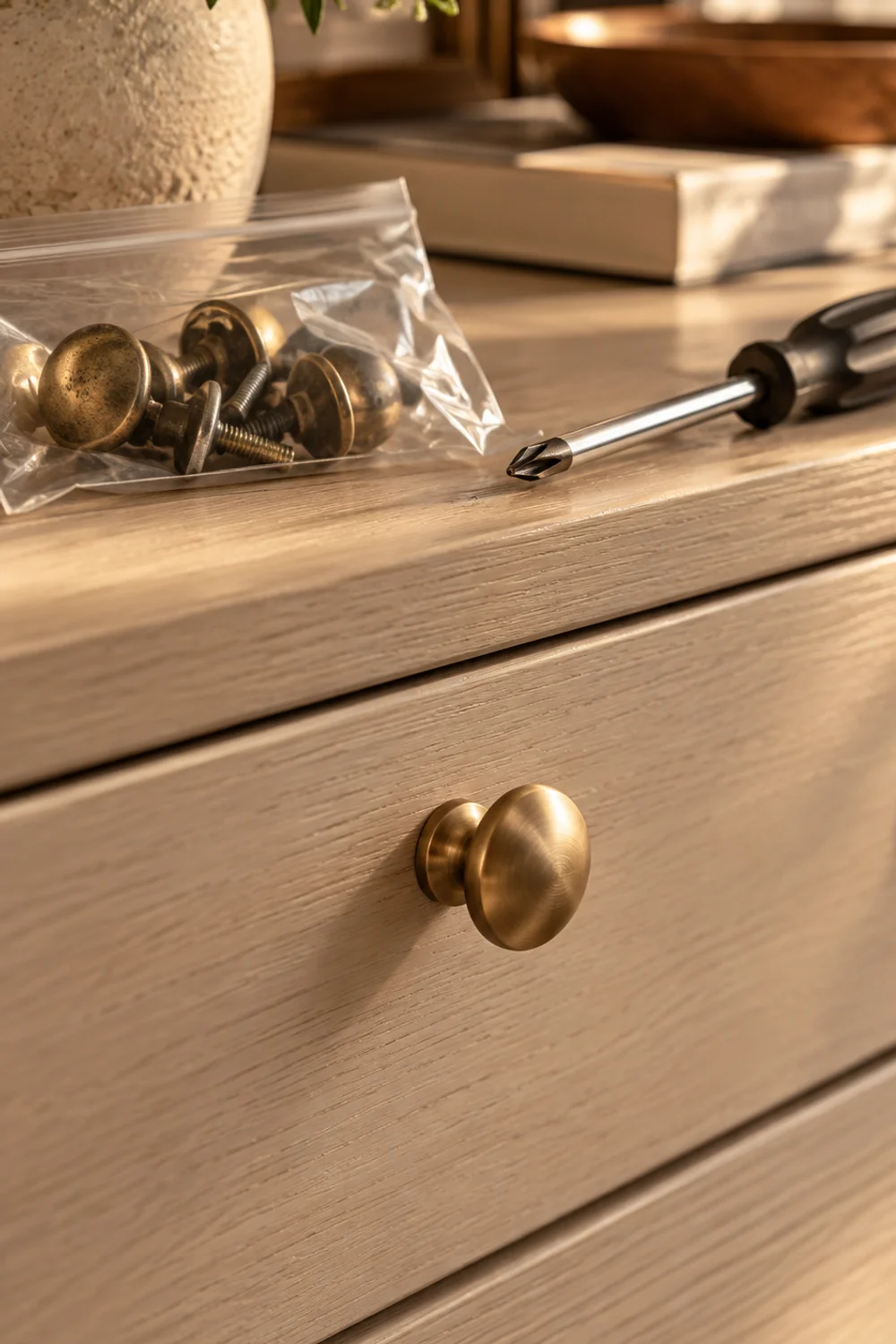
If the dresser in your rental looks dated, there is a good chance the problem is not the dresser but the hardware. Knobs are what your hand touches and what the eye lands on, and swapping them is one of the few upgrades with no adhesive and nothing on the wall. It takes a screwdriver and a little time.
These knobs are champagne bronze, single-hole zinc alloy pulls in a 30-pack, with 1-inch screws included for drawers and dressers.
Start by checking what you have. These are single-hole knobs, which means one screw hole per drawer front, so they suit furniture that already has single-hole knobs. If your dresser has two-hole pulls, these will not cover the second hole, and you would need a different part. The listing also names 1-inch screws, so check your drawer-front thickness before you begin.
Keep the originals. Drop them into a labeled bag and tape it inside a drawer, so the dresser can go back exactly as you found it. This matters most when the furniture belongs to your landlord, but it is a good habit even when it does not.
Champagne bronze is a warm metal, and it pairs well with the oatmeal headboard and cream wall from earlier. Try to keep a bedroom to two metal finishes: here, black for the shelf and rod, and one warm bronze for the hardware. More than that and the eye cannot settle.
The pack of thirty is more than one dresser needs, so use the extras on a nightstand or a closet door, so the finish repeats around the room. That small repetition is what makes separate pieces look as though they belong together.
10. Make the Most of a Small Bedroom With a Freestanding Corner Rack
 Save it
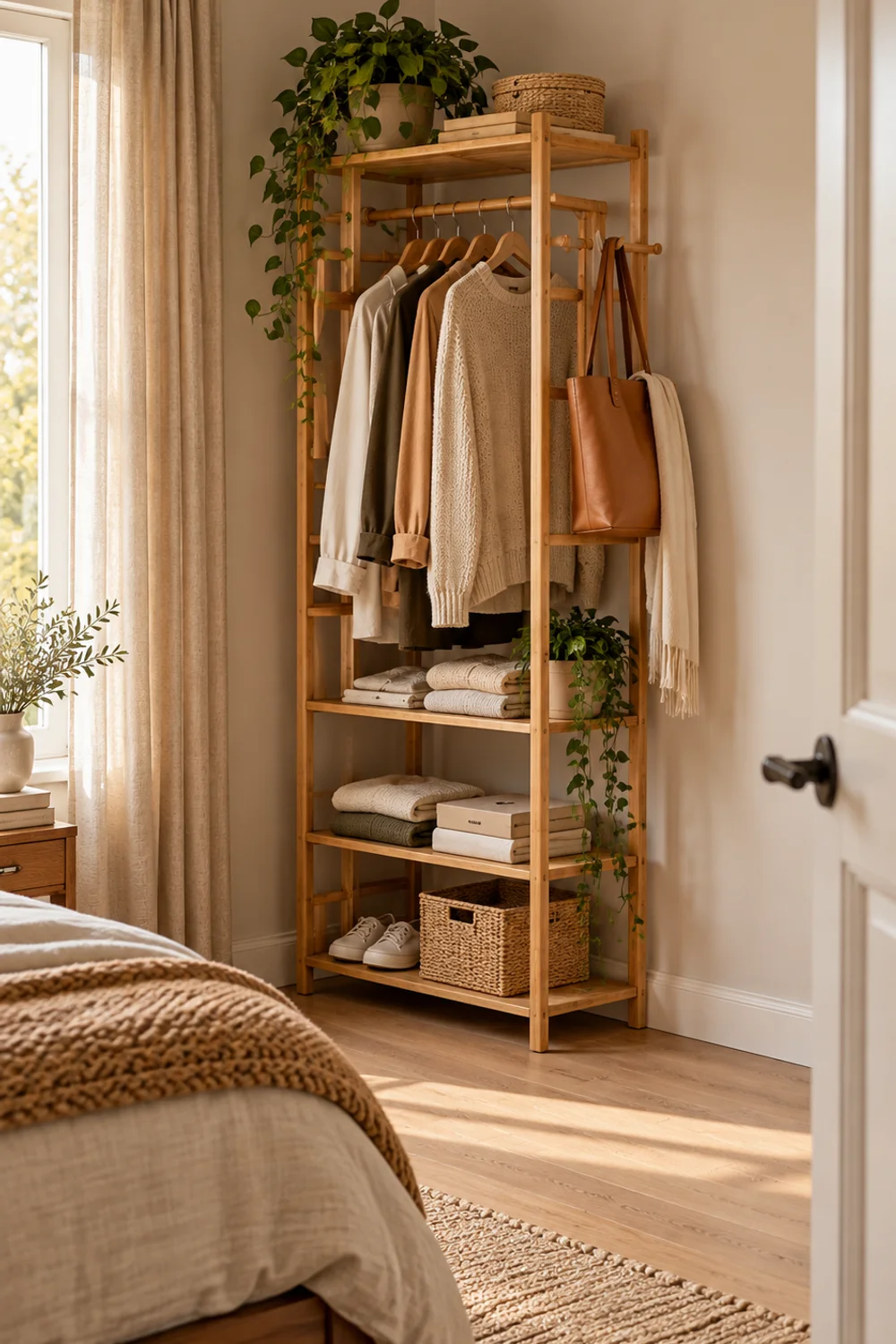
The corner of a bedroom is usually wasted: a gap behind the door, a laundry basket, a stretch of wall nobody uses. A freestanding rack turns that dead space into a place for the clothes you wear most, and in a rental with no closet, or a closet that is far too small, it can be the most useful piece of furniture you add.
The bamboo rack in this guide is sold as a small-space corner clothes rack with shelves and two hooks, a freestanding open wardrobe pitched for bedrooms, entryways and apartments.
Check the specifications before you commit. The product name does not give the footprint or the maximum load, so confirm both on the listing, and measure your corner including the baseboard. A rack that is too wide for the corner looks like a mistake, and one that is overloaded will lean, so hang less than the limit.
An open rack rewards editing. Hang what you wear weekly, fold the rest on the shelves and use the hooks for a bag or a robe. If more than the rack comfortably holds is out in the open, the corner will look like a clothing store in the middle of a sale, which is the opposite of the calm you wanted.
If the rest of your storage is the problem, Small Bedroom Organization Ideas That Instantly Free Up Space works through the bedroom zone by zone, from under the bed to the closet shelf.
Position it so the door clears it and so the rack is not the first thing you see from the bed.
11. Warm Up the Light You Already Have With a Plug-In Dimmer
 Save it
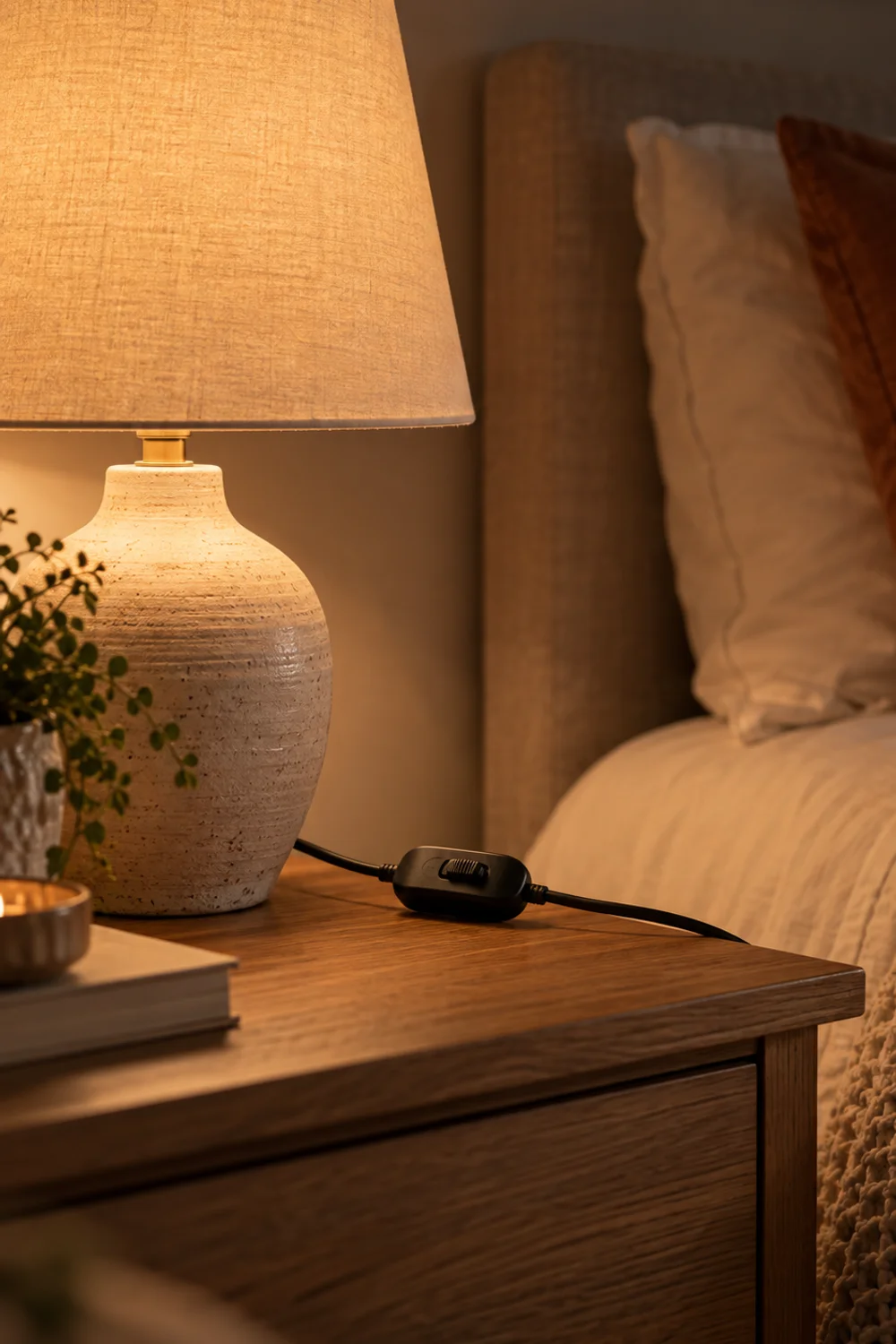
Even with sconces, many rented bedrooms still depend on a lamp or two, and a lamp is often at the wrong brightness. A bedside lamp that is perfect at six in the evening is harsh at eleven, and a wall switch that only goes on or off cannot help. A plug-in dimmer changes that in a moment, with no electrician and nothing for the landlord to notice.
The black table-top plug-in lamp dimmer, and its listing names dimmable LED, halogen and incandescent bulbs.
It sits between the lamp’s plug and the socket, so the lamp stays where it is and the brightness moves to a control you can reach. That makes it suited to a bedside lamp, a reading lamp or a floor lamp in the corner, anywhere you want light to fall as the evening progresses.
Check compatibility before you plug it in. Use a bulb that is marked as dimmable, and read the dimmer’s wattage rating on the pack against the wattage of your lamp. The ratings are not shown in the listing summary, so the packaging has the final word. Do not combine it with smart bulbs unless both manufacturers say it is fine.
Pair it with a warm bulb. A bulb in the warm-white range gives a golden, restful light, and a dimmer lets you take it lower still, which is what you want an hour before sleep. Cool, bright bulbs belong in the kitchen.
12. Add a Full-Length Mirror to Make Your Bedroom Feel Brighter and Bigger
 Save it
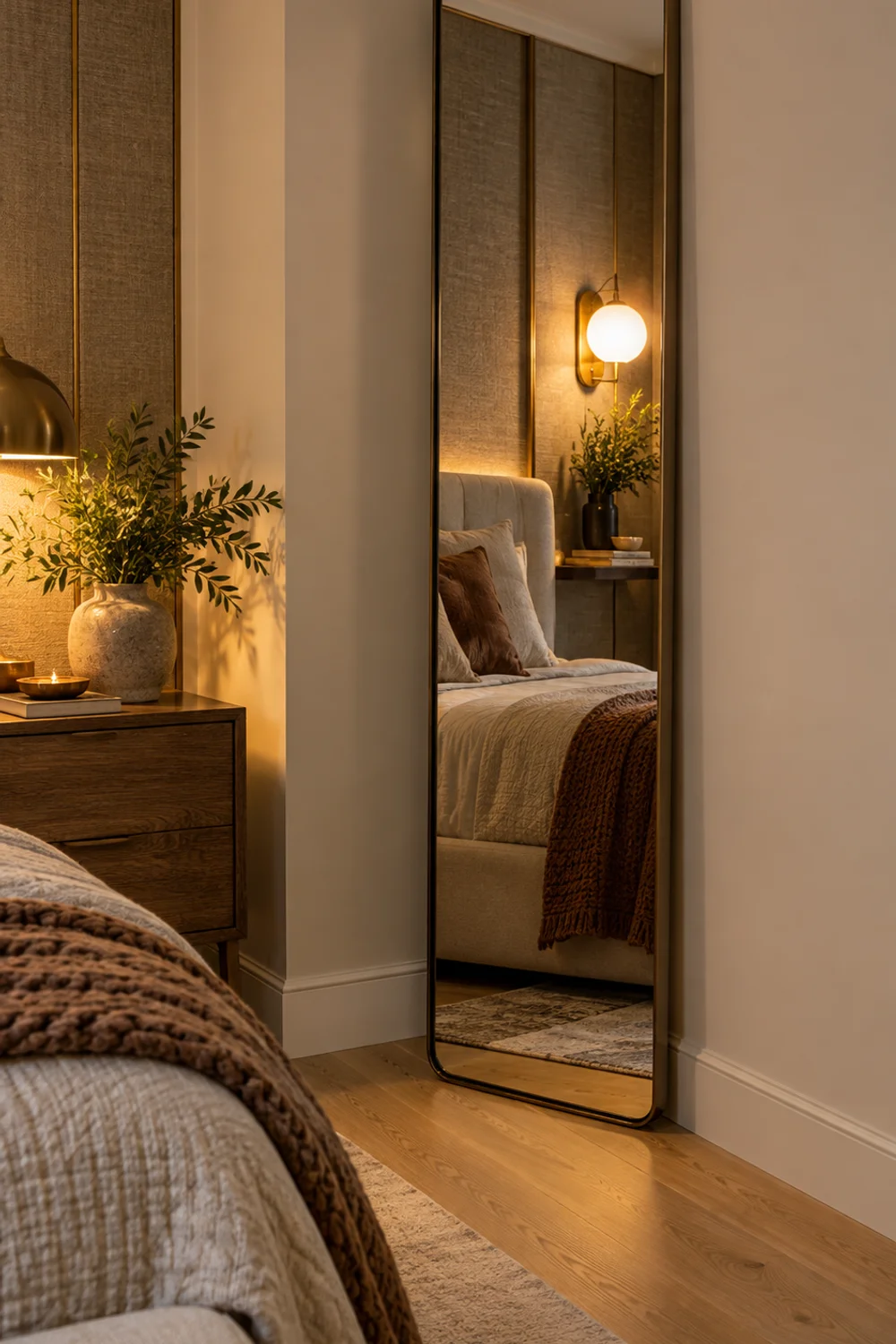
In a rented room you cannot move the walls or the windows, which makes a tall mirror less an accessory than an edit. A slim one does its best work as a single, deliberate stroke rather than a way to fill a gap, and the brighter, bigger feeling comes not from the glass but from what it is given to repeat. Decide what you want to see twice, and style the mirror around that one thing.
This mirror measures 16 by 59 inches, with an aluminum alloy frame and glass the listing calls shatter-proof, and it is sold for floor-standing, leaning or hanging use with a stand.
Think about composition before location. Stand in the doorway and notice what a mirror would reflect from each corner: the glow of the sconces, the textured panel behind the bed, the headboard, the little shelf by the door. A mirror placed to catch those pieces turns them into a pair, which gives the room depth and a little more light without adding anything.
At about sixteen inches wide, this is a slim piece, so it suits a narrow wall, a corner or the gap beside a wardrobe, rather than leaning against a wide expanse as a statement. Angle it slightly and look from the bed: you should see something worth seeing, not the back of the door.
Stability deserves a moment. Tall, narrow mirrors can tip, and this listing offers no anti-tip or anchoring guidance, so do not assume it is safe to leave unanchored. Follow the manufacturer’s instructions, stand it on a firm, level floor away from the door swing, walkways and anywhere children or pets play, and if the instructions call for a wall fastener, weigh that against your lease.
Hanging is one of the listed options, but that is a wall mount, so it is not part of the no-drill advice here. The stand leaves your wall untouched, but it does not settle the stability question, so read the manufacturer’s instructions before you decide where the mirror lives.
Common Mistakes
1. Trusting “removable” without testing
Removable describes the product, not your wall. Paint, age, humidity and how long something has been stuck all change what comes away with it. Try a hidden patch, wait, remove it and look, before you commit a whole panel, a shelf or a pair of sconces.
2. Ignoring weight and surface limits
Adhesive products depend on a clean, smooth, suitable surface and a load within the pack’s limits. Wallpaper, textured walls and fresh paint are all surfaces that adhesive makers typically warn about. When a listing does not state a rating, read the packaging, and when in doubt, keep the load light.
3. Buying before measuring
A tension rod needs a recess of the right width, a headboard needs a bed of the right size, a clip-on shelf needs a rail of the right thickness, and a rug needs a floor of the right dimensions. Most of the disappointment in a rental comes from a product that was nearly the right size.
4. Hanging things above the bed
Anything that can fall ends up on a sleeper. Keep shelves, mirrors and heavy art on the walls beside the bed or across the room, and give anything with adhesive a surface and a load it was made for.
5. Treating reversible as risk-free
A piece that stands on its own avoids the wall but not every risk. A tall mirror can tip, and a rack can lean if it is overloaded. Read the instructions for stability and weight, and keep anything tall or heavy away from doors, walkways and small children.
Frequently Asked Questions
Does peel-and-stick wallpaper damage rental walls?
It can, depending on the paint, the age of the wall and how long the paper stays up, and no listing can promise otherwise. Keep the panel small, and ask your landlord if your lease requires permission.
What can I use in a rental without nails?
Strips and clip-on pieces avoid nails in the wall, tension rods hold between two surfaces, and free-standing furniture needs no fixing at all. Each has limits, so read the weight rating and surface guidance on the pack, and keep anything you stick up light and unbreakable.
How do I light a rented bedroom without hardwired fixtures?
Layer it, using no-drill pieces. Battery-powered sconces add wall light, a lamp with a plug-in dimmer lets you set the evening mood, and a warm bulb makes the whole room softer. Check that each bulb and dimmer are compatible before you plug anything in.
Which upgrade should I start with?
Start with the bed wall and the light, because they change how the whole room feels. A panel behind the bed, a headboard and softer lighting do more together than a dozen small accessories.
Final Thoughts
A rented bedroom does not need to wait for a permanent home to feel like yours. The changes that matter most are the ones that take the least permission: texture behind the bed, a headboard that stands by itself, light you can lower, a floor that feels warm, a corner that works. Each of these can be peeled off, folded, unplugged or simply picked up and moved.
You do not need all twelve. Pick the two or three that answer what bothers you most when you walk in, do them well, and let the rest wait. The room will start to feel finished long before the lease is up, and the pieces that made it so will be ready to move with you.
This post contains affiliate links. I may earn a small commission at no extra cost to you. As an Amazon Associate I earn from qualifying purchases.

GET YOUR FREE CHECKLIST
A More Organized Home
Starts Here
Join the community and my free Home Organization Checklist, plus weekly tops and inspiration.
Thank you!
You have successfully joined our subscriber list.